Thursday, August 31, 2006

Picasso Museum


Another of the small "house" museums in Paris is the Picasso Museum. (I wrote about Picasso and the museum a bit May 14, and I posted about the Rodin Museum May 3.) The building that has housed the Picasso Museum since 1985, is Hôtel Salé, 5, rue de Thorigny, built in 1656.

I am partial to certain of Picasso's works in this museum. For instance, of all his paintings, this portrait of Jacqueline is my favorite. I see myself in her I guess, those sharp lines that need softening.

Even more than this, I love Picasso's sculptures built from found objects done in the 1950s.
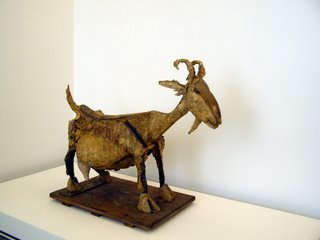

The goat. See the leather fringe on his side? What do you think his head is made from?
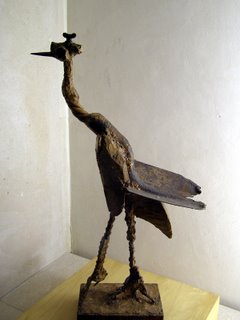
The stork. See the shovel and spigot?
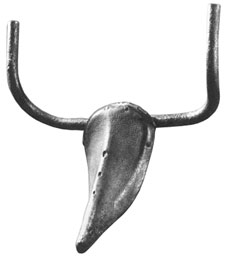

The bull. Bicycle seat and handlebars.
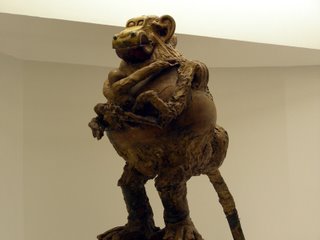


The baboon. Car for a head.

There is something reassuring as well as conservationist in the use of found objects in art. I love the idea of using what already exists, has been tossed aside and is unused, to create something interesting and beautiful. I also find that seeing what is familiar in a sculpture of something else gives me a sense of understanding and connection I might not have found without the object being used that way.

It reminds me of writing poetry. We find fragments in everyday life and put them together with other fragments that no one would think to put together. And they become unified and deeper, if the poet is good.

Wednesday, August 23, 2006

St. Gervais

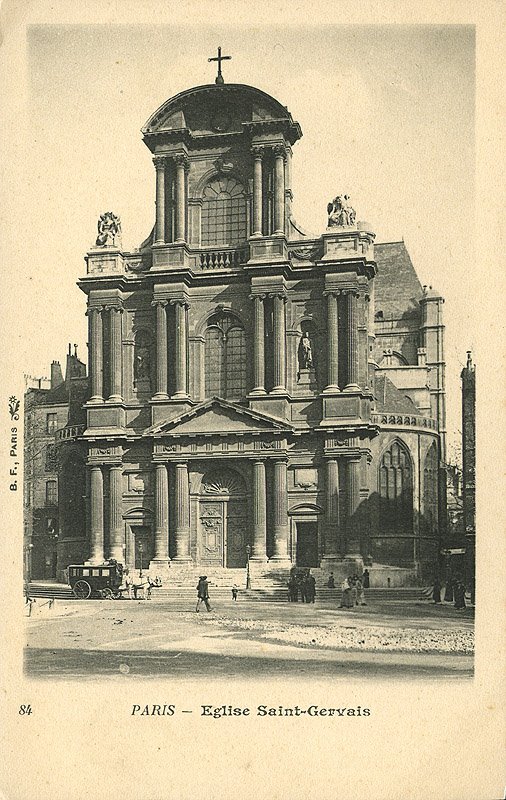
Etching found at http://bseince.free.fr/bfparis/collection.htm

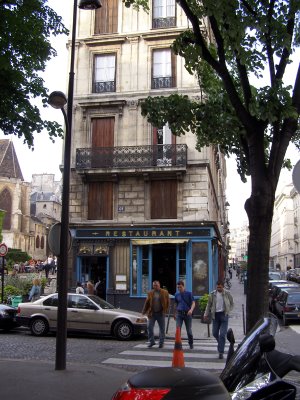
There is a surprising little alleyway just off the Quai de l'Hotel de Ville by the Seine, around the corner from the Hotel de Ville (City Hall) across from pont Louis Philippe, which I first discovered on my last trip to Paris, in May this year. This narrow building, below, pulls you in to the alleyway with its unusual stature.


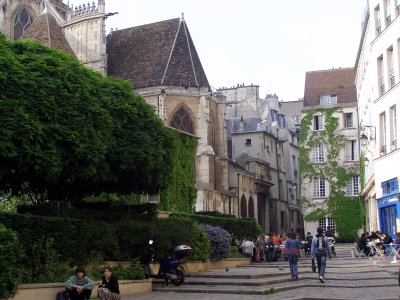
Just to the left of this building is the St. Gervais church, (there is also a St. Gervais ski resort in the French Alps. I can't find out who St. Gervais was, though!) and the alley that goes up steps next to it, called place St. Gervais. Leave it to the Europeans to take advantage of every open space and set up a café outside on those steps. Brilliant!


The St-Gervais-et-St-Protais Church is among the oldest in Paris. There are records that date back to the 4th century, saying there has been a church on this site that long. But the way it looks now is from the 16th century. (So new.)

The place next to the church used to be called Crossroads of the Elm, for the large elm tree that used to stand there (and still has photos in the church). I guess a lot of money changed hands in that crossroads.


Also, on Good Friday in 1918, during WWI, a German shell fell on the church, killing 100 people.

Heather Stimmler-Hall says, "Today the church is used by the Catholic Community of Jerusalem, whose robed monks and nuns are often seen strolling around the neighborhood. Stop by at 4pm on the first Saturday of the month to hear a free recital on the oldest organ in Paris, built in 1601."

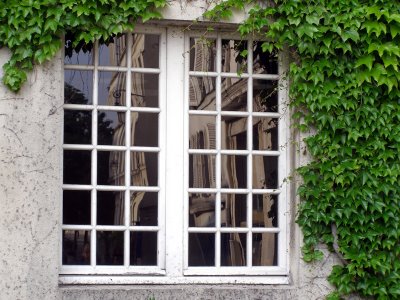
This window faces the place on rue des Barres.

Monday, August 14, 2006

Bookstalls on the Seine


A favorite pasttime in Paris is walking along the bookseller stalls on both sides of the Seine. You can count on the vendors for books in French and English, German and Japanese, posters old and new, postcards old and new, vintage magazines with photos of Marilyn Monroe or Miles Davis on the covers.

The bateaux glide by on the Seine. Streams of little cars drive by on the quays. Smells of coffee or roasting chestnuts fill the air. Occasional sirens hee-haw in and out. You can hear the sound of the wind through the sycamores and the white chestnuts if you listen.

Rain or shine, the booksellers come out, lift up the lids on their stalls, and set out their papers.

Friday, July 07, 2006

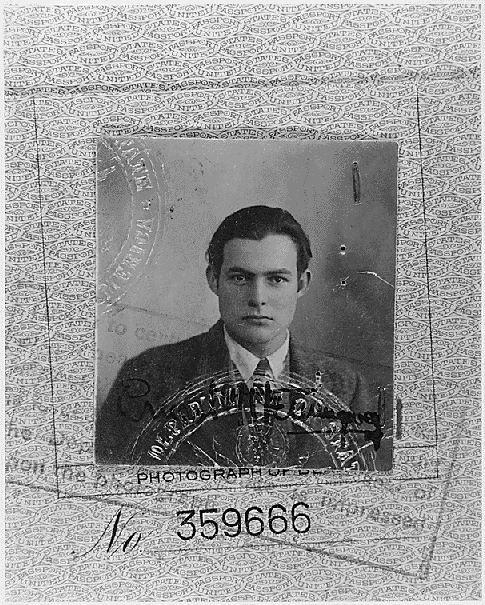
Hemingway in Paris

Hemingway's passport photo

The Moveable Feast was written by Ernest Hemingway soon before he died in 1961 about his expatriate years in Paris in the 1920s.


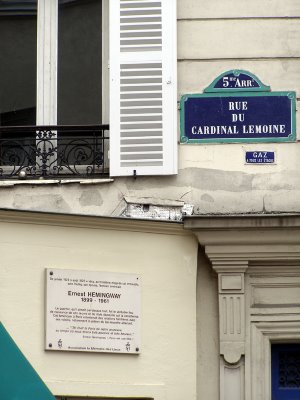
Hemingway's apartment at 74 rue de cardinal Lemoine

It is an interesting account of life in Paris with wife Hadley and his relationships with other expatriates referred to as "The Lost Generation" by Gertrude Stein, including Ford Madox Ford, TS Eliot, Ezra Pound, F. Scott Fitzgerald and his wife Zelda.

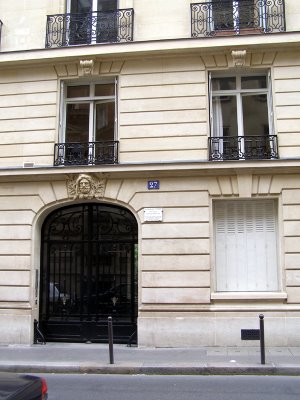
I spent some time in May retracing Hemingway's steps between his apartment at rue de cardinal Lemoine and Gertrude Stein's apartment on the other side of the Luxembourg Gardens, 27 rue de Fleurus.

Gertrude Stein's apartment at 27 rue de Fleurus

Ernest and Hadley spent quite a bit of time with the daunting Stein in her apartment filled with original artwork by their contemporary Picasso and others. Stein told Hemingway to invest in art, though he had barely enough money to keep his wife and himself fed.

Here is an excerpt from A Moveable Feast:

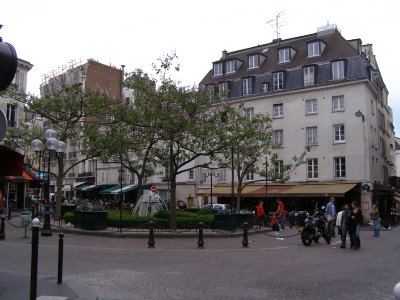
"Then there was the bad weather. It would come in one day when the fall was over. We would have to shut the windows in the night against the rain and the cold wind would strip the leaves from the trees in the Place Contrescarpe. The leaves lay sodden in the rain and the wind drove the rain against the big green autobus at the terminal and the Café des Amateurs was crowded and the windows misted over from the heat and the smoke inside. It was a sad, evilly run café where the drunkards of the quarter crowded together and I kept away from it because of the smell of dirty bodies and the sour smell of drunkenness."

Place Contrescarpe in May


Posted by Picasa Players of a game similar to bocci ball called petanque in the Luxembourg Gardens, which lay between Stein's and Hemingway's apartments